As sustainability regulations accelerate and packaging scrutiny intensifies, one question continues to surface across the plastics industry: Are current systems truly solving the problem — or simply managing perception?
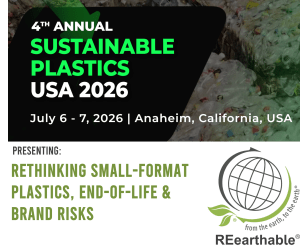
At Sustainable Plastics 2026, Charlotte Wintermann, Founder & CEO of REearthable®, will speak on one of the most overlooked but urgent challenges facing modern packaging: the failure of small-format plastics within existing recovery systems.
Charlotte’s session will explore how the plastics conversation is rapidly evolving beyond recycling claims and into measurable accountability — particularly as brands face increasing pressure from Extended Producer Responsibility (EPR), consumer expectations, and regulatory change.
Speaking Topic: Where Sustainability Meets System Reality
While recycling remains a critical component of circularity, not all materials are recoverable in practice.
Small-format plastics — including caps, closures, cosmetic packaging, and other lightweight components — frequently bypass sorting infrastructure due to size, contamination, mixed materials, and economic limitations.
At scale, this creates a disconnect between recyclable intent and actual recovery outcomes.
Charlotte’s presentation will address four critical areas shaping the next generation of plastics and packaging decisions:
1. Why Small-Format Plastics Continue to Escape Recovery Systems
Many packaging formats are technically recyclable, yet remain functionally unrecoverable within today’s sorting infrastructure.
Small items often fall through mechanical screens, evade optical sorting systems, or become economically unviable to reclaim. This creates a hidden waste stream that continues to undermine sustainability goals despite increasing consumer participation in recycling programs.
The discussion will focus on how real-world material flow differs from theoretical recyclability claims — and why this distinction matters for brands.
2. The Growing Pressure of Accountability and Increasing Hidden Costs
Global packaging regulations are shifting quickly.
Extended Producer Responsibility policies are moving responsibility upstream, requiring brands to consider what happens after disposal — not simply what appears recyclable on-pack. As reporting requirements become more rigorous, material selection is becoming directly tied to compliance, cost exposure, and reputational risk.
3. Next-Generation Materials That Match Performance Without Compromising End-of-Life
The future of plastics is no longer limited to choosing between performance and sustainability.
Emerging materials are beginning to deliver the mechanical performance expected from polypropylene while introducing more responsible end-of-life pathways. We will discuss how new material innovation is moving beyond niche alternatives and toward scalable, drop-in solutions capable of integrating into existing manufacturing environments.
4. Sustainable Adoption Without Manufacturing Disruption
One of the largest barriers to sustainable material adoption has historically been operational disruption.
Manufacturers often face difficult tradeoffs between sustainability goals and maintaining equipment compatibility, supply chain continuity, and cost predictability. We’ll explore how sustainable material adoption can align with existing infrastructure — enabling brands to move forward without compromising manufacturing continuity.
Why This Conversation Matters Now
Plastic sustainability conversations are entering a new phase.
The question is no longer whether brands should evolve — it is how quickly they can adapt to changing expectations.
Consumers increasingly expect measurable action, regulators are tightening accountability frameworks, and companies are reevaluating how packaging decisions affect long-term brand value.
At the same time, small-format packaging remains one of the largest blind spots in sustainability discussions despite representing a significant portion of everyday consumer packaging.
Sustainable Plastics 2026 provides an opportunity to move beyond surface-level claims and examine how brands and manufacturers can move at the speed of the consumer demand for more sustainable packaging.
Join the Conversation at Sustainable Plastics 2026
As industries navigate regulatory change, shifting consumer expectations, and growing demand for measurable sustainability outcomes, conversations around plastics are becoming more critical than ever.
Whether you work in packaging, manufacturing, sustainability, or brand strategy, this discussion will offer valuable insight into where plastics innovation must head next.
