
Biodegradable Plastic Replacement
from the earth, to the earth®, we are REearthable®.
We need to focus on every improvement, large and small to help reduce climate impact. Using ecoPLAS® over Polypropylene provides significant savings.
With all the ways we’re working to improve decarbonization in the processes and choices we control—including lightweighting (using less material)—we have a better solution that delivers the same high-quality results: ecoPLAS®.
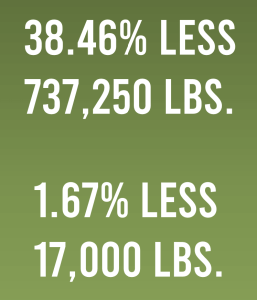
We crunched the numbers to show the impact of using our biodegradable and compostable material over virgin mid-range polypropylene. The savings are staggering.
Polymer grades cover a wide range of applications; however, for this comparison, we selected a mid-range polypropylene resin with a relatively low CO₂e/kg (carbon dioxide emissions per kilogram of material) of 1.95 CO2e/kg compared to ecoPLAS®.
Among other factors, waste can be measured by the amount of material used pound-for-pound to create an object. This is directly tied to a material’s shrink rate. For example, if you need 1.2 lbs. of material to produce a set number of objects and the shrink rate is higher, the excess is either burned off, wasted, or becomes a byproduct after production.
These finite details matter.
To put it in relatable terms: imagine tossing a linen shirt in the wash, only for it to shrink. It was made from the same amount of material, but now it’s a different size. That lost material is effectively waste—more material, more energy, same product outcome.
By using ecoPLAS® over polypropylene, you automatically reduce your carbon footprint—less material, less energy, same product, same process. Win!
Want to learn more? Let’s Talk.
| Cookie | Duration | Description |
|---|---|---|
| cookielawinfo-checkbox-analytics | 11 months | This cookie is set by GDPR Cookie Consent plugin. The cookie is used to store the user consent for the cookies in the category "Analytics". |
| cookielawinfo-checkbox-functional | 11 months | The cookie is set by GDPR cookie consent to record the user consent for the cookies in the category "Functional". |
| cookielawinfo-checkbox-necessary | 11 months | This cookie is set by GDPR Cookie Consent plugin. The cookies is used to store the user consent for the cookies in the category "Necessary". |
| cookielawinfo-checkbox-others | 11 months | This cookie is set by GDPR Cookie Consent plugin. The cookie is used to store the user consent for the cookies in the category "Other. |
| cookielawinfo-checkbox-performance | 11 months | This cookie is set by GDPR Cookie Consent plugin. The cookie is used to store the user consent for the cookies in the category "Performance". |
| viewed_cookie_policy | 11 months | The cookie is set by the GDPR Cookie Consent plugin and is used to store whether or not user has consented to the use of cookies. It does not store any personal data. |